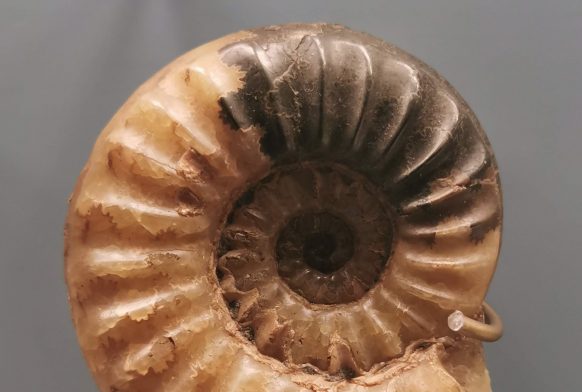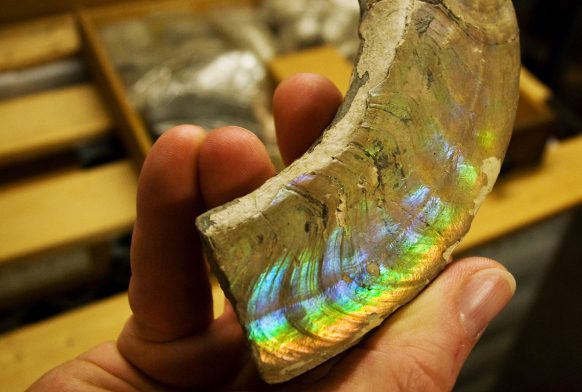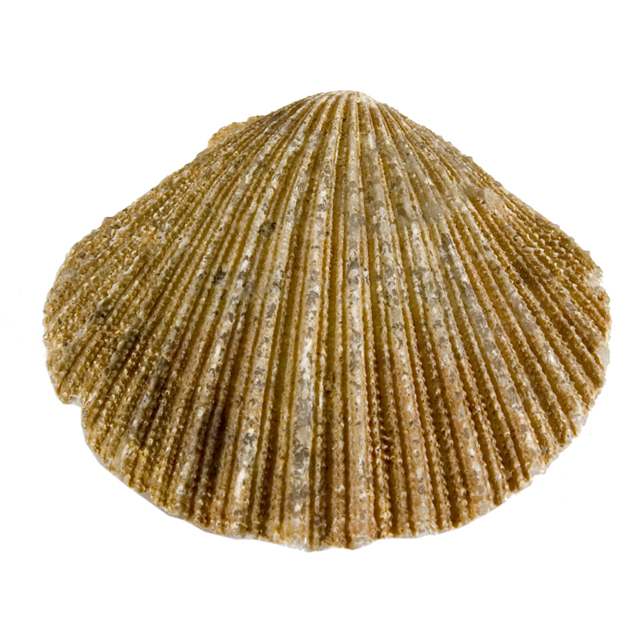
Fossil specimen of a Chlamys (scallop) bivalve in a sandy matrix (c.80-60 million years).
This fossil is thought to be about 60-80 million years old and would not have been affected by humans who have only been in existence for the last 2 million years. Chlamys is a fairly common specieds which dates from the Triassic period. However the Pectens (scallops or clams) alive today are often collected by humans for food and are sometimes farmed to produce more of them. They are not generally considered to be endangered by human activity. Before the formation of fossils was understood, bi-valve fossils were called 'Devil's Toenails'. In the 17th and 18th century some people believed that it could cure arthritis.