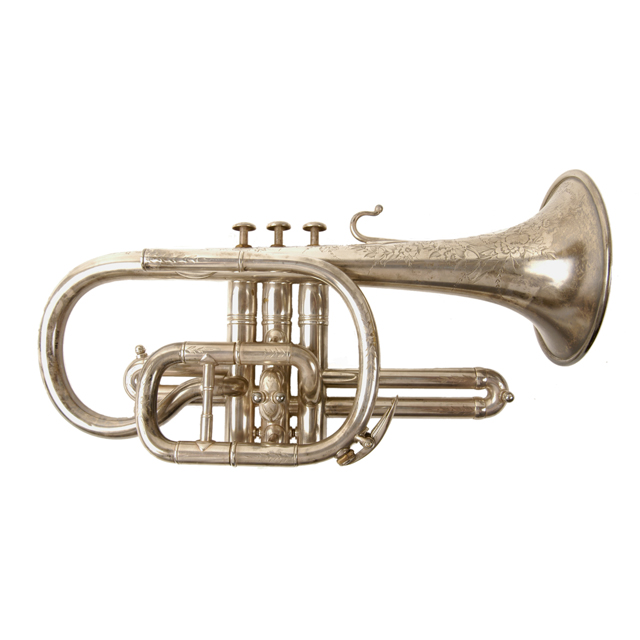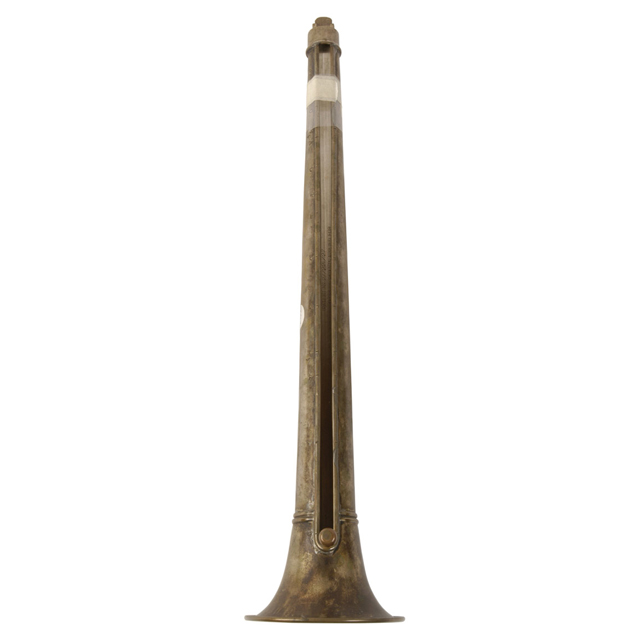
Swanee-sax made from silver plated brass. The instrument has a fitting for a saxophone mouthpiece and a conical bore with a slide along its length. Lacks mouthpiece. Tubing below the mouthpiece inscribed: PATENT No. 277221/27 / FOREIGN PATENST APPLIED FOR. Bell of the instrument is inscribed: SWANEE-SAX / REGISTERED / AND AT / U.S.A. PAT. OFF.
The Swanee Sax was patented in 1927 by Samuel Bowley Barnes. Barnes came to London in the 1900s and opened a musical instrument shop in Rathbone Place with his partner Albert Mullins. Mullins drowned on the Empress of Ireland which sank in 1914. The instrument was marketed for its ease of use: "No keys to manipulate - No buttons to press - Nothing to go wrong. Played by a simple movement. Can be played from music or by ear". However, playing the Swanee Sax in tune was difficult, so the advantages listed here were not enough for it to compete with the conventional saxophone.